
Your cart is currently empty!
Honeycomb Packing Paper vs Bubble Wrap: Which Is Better for Packaging?
Choosing between honeycomb packing paper vs bubble wrap is an important decision for businesses that ship products to customers. If your products are fragile, delicate, or sensitive, using the right protective packaging material can help prevent damage during transportation.
But which option is better: honeycomb packing paper or bubble wrap?
Both materials are widely used for protective packaging, but they differ in several important ways, including the type of protection they provide, storage requirements, appearance, environmental impact, and overall packaging experience.
In this article, we compare these two materials to help you choose the best option for your orders and your sustainable packaging strategy.
What Is Honeycomb Packing Paper?
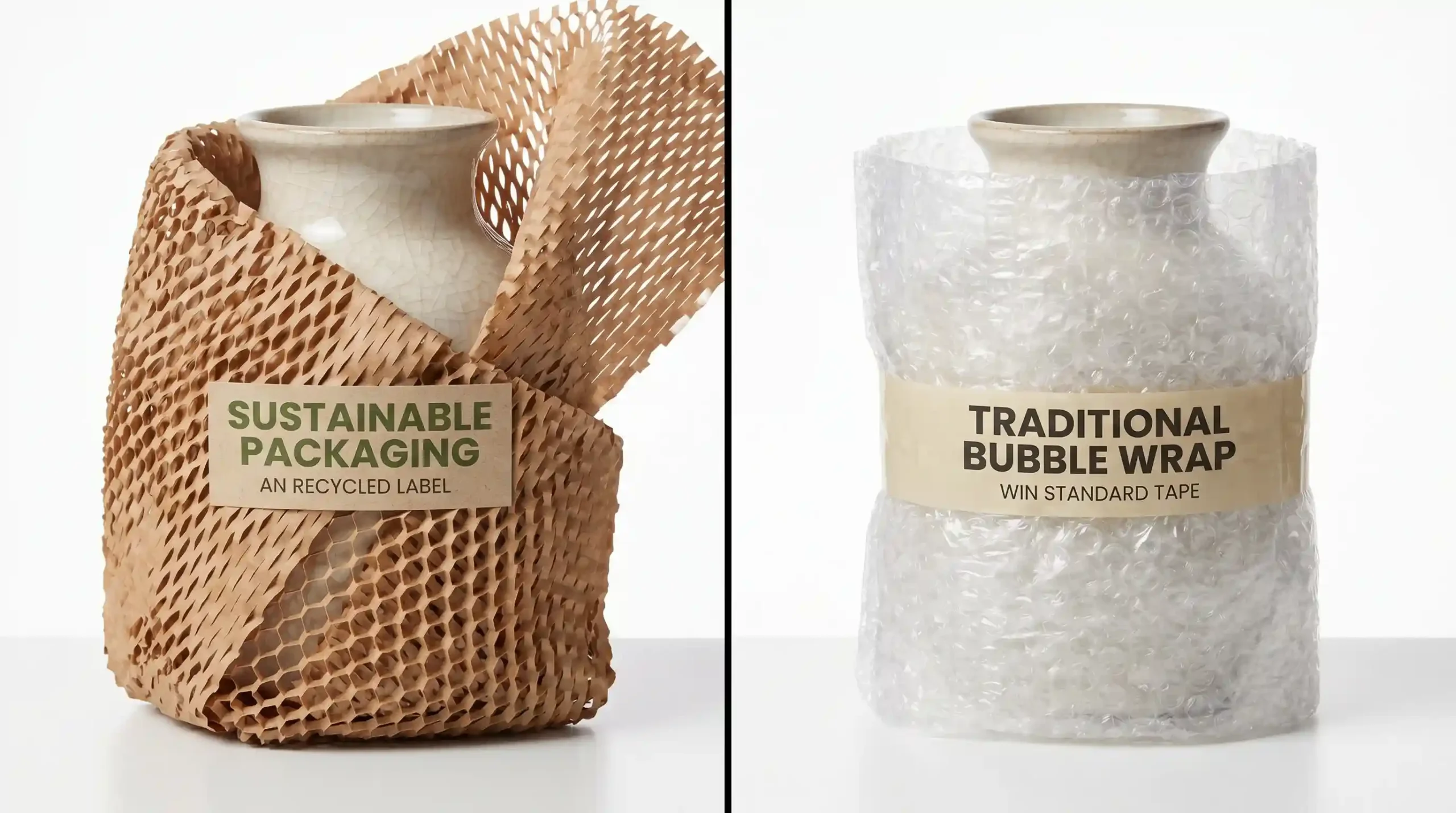
Honeycomb packing paper is a practical material used for protective packaging. It is typically made from kraft paper and stored in a compact form. When stretched, however, it expands into a three-dimensional honeycomb structure.
This honeycomb pattern allows the paper to wrap securely around products. The expanded cells can help distribute pressure and absorb minor impacts across a larger surface area, helping protect products during handling and transportation.
Honeycomb packing paper can be used for packaging products such as:
- Glassware and fragile products
- Ceramics and decorative items
- Handmade products
- Cosmetics and beauty products
- Accessories and delicate items
- Small electronic devices
Its natural appearance is another important advantage. For this reason, many businesses use honeycomb paper to create a more attractive and memorable packaging experience.
What Is Bubble Wrap?
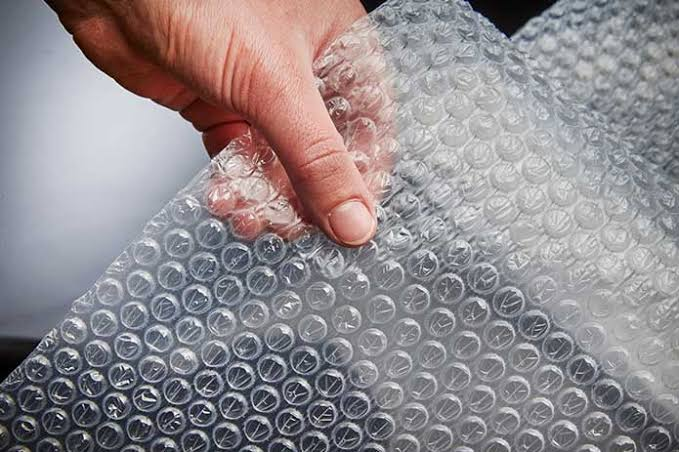
Bubble wrap is one of the most widely recognized materials used for protective packaging. It is made from plastic and contains air-filled bubbles that help absorb impacts and pressure.
Bubble wrap has been used for many years to protect different types of products during shipping. Its lightweight structure, flexibility, and ease of use are among its main advantages.
Bubble wrap is commonly used for:
- Electronic products
- Small and fragile items
- Products with irregular shapes
- Protecting empty spaces inside boxes
- Sensitive products during transportation
However, the choice between honeycomb packing paper vs bubble wrap is not only about the level of protection they provide.
Honeycomb Packing Paper vs Bubble Wrap: Protection
Both materials can help protect products from impacts, but they work in different ways.
When stretched, honeycomb packing paper creates a three-dimensional structure that adapts to the shape of the product. This makes it particularly useful for items with sharp edges, irregular shapes, or delicate surfaces. The paper can wrap relatively tightly around the product and help keep it secure.
Bubble wrap, on the other hand, protects products through its air-filled bubbles, which absorb impacts and pressure. This provides effective cushioning for many types of products.
However, if the bubbles become damaged or lose air, the level of protection may decrease.
Therefore, when comparing honeycomb packing paper vs bubble wrap, the type, weight, shape, and fragility of the product should play a major role in your decision.
Honeycomb Packing Paper vs Bubble Wrap: Environmental Impact
One of the biggest differences between these two materials is their environmental profile.
Honeycomb packing paper is generally made from paper and can be a suitable choice for businesses that prioritize sustainable packaging. Depending on the specific material and local recycling infrastructure, paper-based packaging may be easier for customers to recycle than plastic alternatives.
Its natural appearance also fits well with brands that want to reduce unnecessary plastic in their packaging.
Bubble wrap, however, is made from plastic. While some types of bubble wrap can be recycled through appropriate collection systems, recycling options are not always easily available to consumers.
As customers become increasingly aware of the amount of plastic used in packaging, paper-based alternatives can also contribute to a more environmentally conscious brand image.
Comparing Cost and Storage Space
When choosing between honeycomb packing paper vs bubble wrap, it is important to consider the total cost of packaging.
Bubble wrap may initially appear to be the more economical option. However, the purchase price is not the only factor businesses should consider.
Storage space, material consumption, packaging efficiency, and the final size of the shipment can also affect overall costs.
Honeycomb packing paper is typically stored in a compact form and can take up relatively little space before use. This can be particularly useful for online shops and businesses with limited storage space for packaging supplies.
Bubble wrap is bulkier because of its air-filled structure, and large rolls may require more storage space in a packing area.
Honeycomb Packing Paper vs Bubble Wrap: Which Is Easier to Use?
Both materials are relatively easy to use.
Honeycomb packing paper can be stretched around the product, allowing its honeycomb structure to expand during the wrapping process. Depending on the product and packing method, this can make packaging quick and efficient.
Bubble wrap is also easy to wrap around products, although tape is often used to keep it securely in place.
For businesses packing a large number of orders, speed and ease of use can make a significant difference. Before choosing a material, consider the type of product you sell and the volume of orders you process.
How Packaging Affects the Customer Experience
Packaging today is about more than simply delivering a product safely. Its appearance has become part of the overall customer experience.
Honeycomb packing paper has a natural, distinctive, and visually appealing appearance. When combined with cardboard boxes, custom labels, packaging twine, or ribbons, it can make an order look more professional and thoughtfully prepared.
This is particularly valuable for online shops that want to improve their unboxing experience.
Bubble wrap is generally viewed primarily as a protective material and usually contributes less to the visual presentation of the package. However, it remains a practical and reliable option for many fragile and sensitive products.
So, Which Is Better: Honeycomb Packing Paper or Bubble Wrap?
The answer depends on your product, budget, order volume, shipping conditions, and overall packaging strategy.
If you are looking for a natural-looking, space-efficient material that can help create a more attractive customer experience, honeycomb packing paper may be a great option. It can be particularly appealing for businesses that prioritize sustainable packaging and want to reduce unnecessary plastic use.
However, bubble wrap remains a practical solution for many fragile and sensitive products. Its air-filled bubbles can provide effective cushioning during transportation.
The best choice does not necessarily mean that one material is always better than the other. In many cases, your specific product will determine which protective packaging material is more suitable.
Find the Right Protective Packaging for Your Products
At Pivazh, you can choose from both honeycomb packing paper and bubble wrap in different lengths depending on your product and packaging needs.
By selecting the right protective material for each product, you can help reduce the risk of damage during shipping while creating a better packaging experience for your customers.
by
Leave a Reply